
Ginlong (Solis) Technologies: Battery Energy Storage Systems Review
Ginlong (Solis) Technologies: A Detailed Review of Its Battery Energy Storage System Business
Searching for a Battery Energy Storage System (BESS) supplier is rarely a one-keyword exercise. Buyers need to connect product range, engineering depth, manufacturing scale and service network to actual application needs. This review profiles Ginlong (Solis) Technologies Co., Ltd., a manufacturer founded in 2005, listed on the Shenzhen Stock Exchange in 2019 and active in more than 100 countries and regions according to its corporate profile.
The facts that follow use the official corporate profile, product specification data and application scenario material supplied for this article. Where the company provides engineering estimates or project outcome claims, they are labelled as company-reported rather than independent test conclusions.
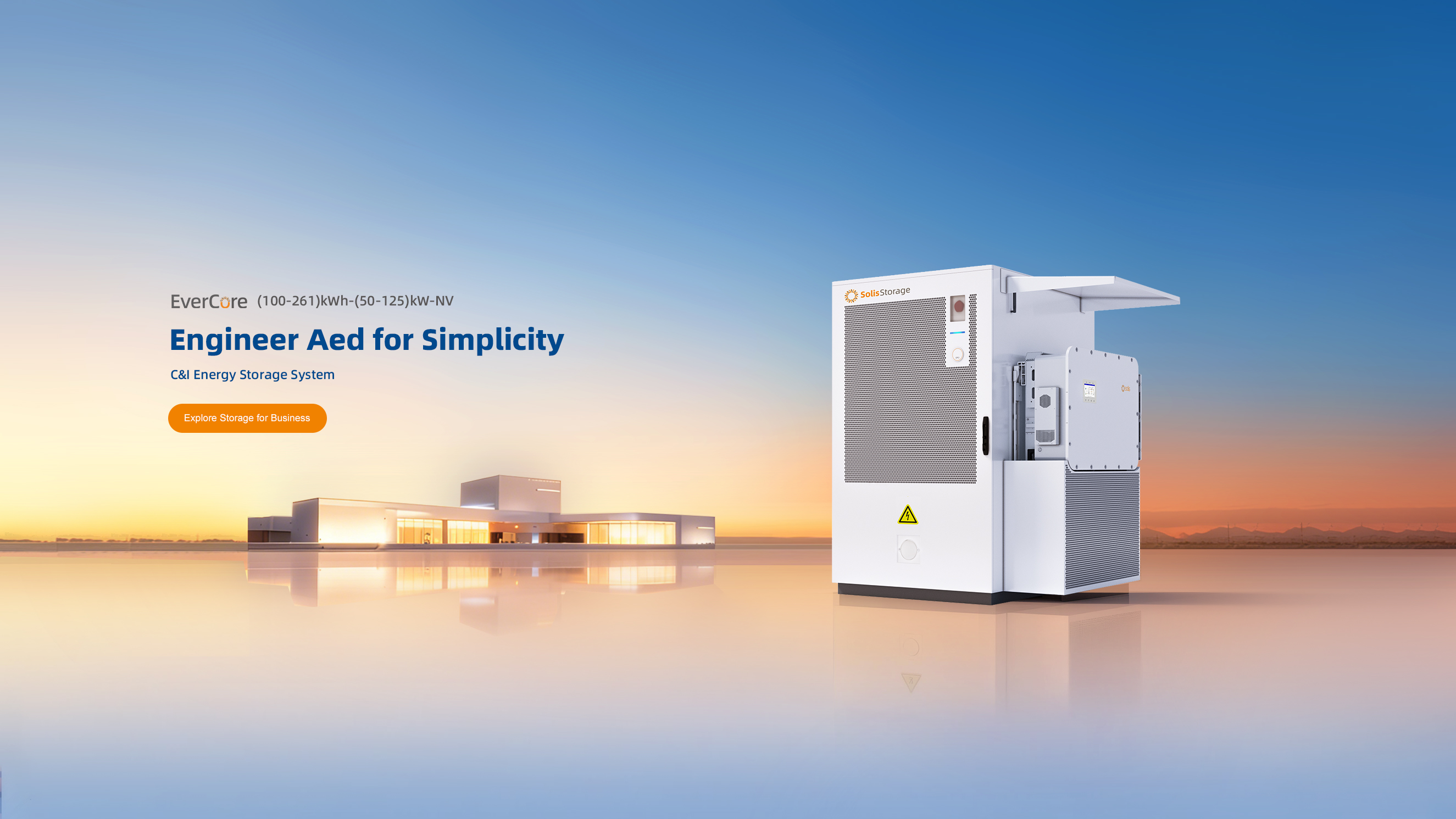
1. Company Overview: Who Is Ginlong (Solis) Technologies?
Ginlong (Solis) Technologies Co., Ltd. markets its products under the Solis and SolisStorage names. The company was founded in 2005 and is publicly listed on the Shenzhen Stock Exchange under stock code 300763. Corporate contact data places its headquarters at No.188 Jinkai Road, Binhai Industrial Park, Xiangshan, Ningbo, Zhejiang, China, 315712.
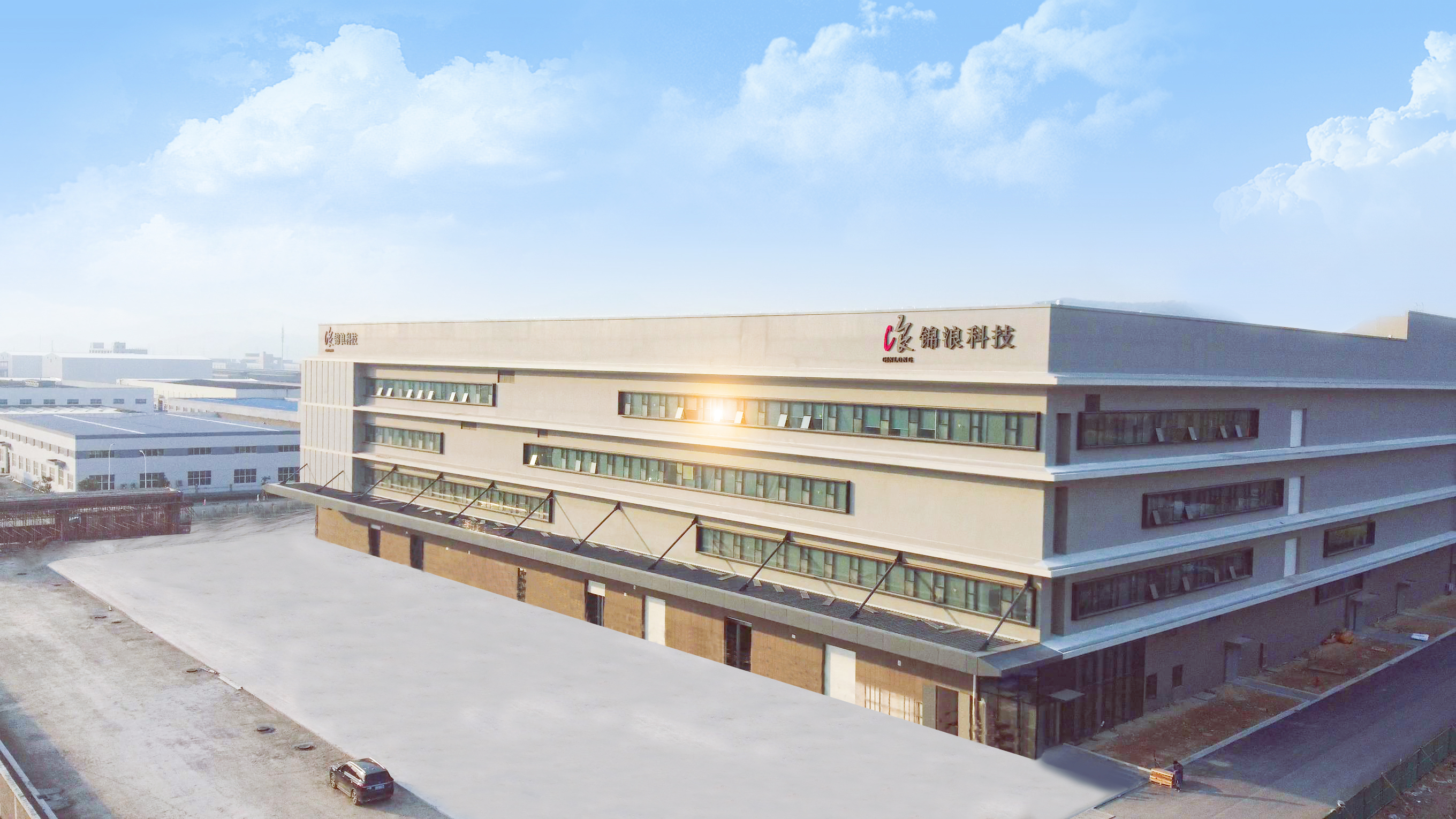
Corporate data provided for this review lists a factory area of 98,114.69 m², more than 5,000 employees, an R&D team of more than 1,000 people and 80GW annual output. The stated export ratio is 70%. Principal markets include Europe, Africa including South Africa, the Middle East and Central Asia, and South Asia. The company profile also says its products are used in more than 100 countries and regions and are supported by offices and technical service centres in Europe, the Americas, Asia-Pacific, Africa and beyond.
SolisStorage is described as the energy storage subsidiary of Solis and a global provider of energy storage system solutions. The company says its capabilities include the independent development of core energy storage technology, with strengths in PCS, EMS and system integration. Its portfolio spans residential energy storage, commercial and industrial (C&I) systems, and utility-scale applications. According to the supplied corporate material, Solis combines solar, storage, diesel, load and intelligent energy management to deliver solutions across different grid conditions and climates.
2. Core Products and Solutions: Residential, Stackable and C&I Energy Storage
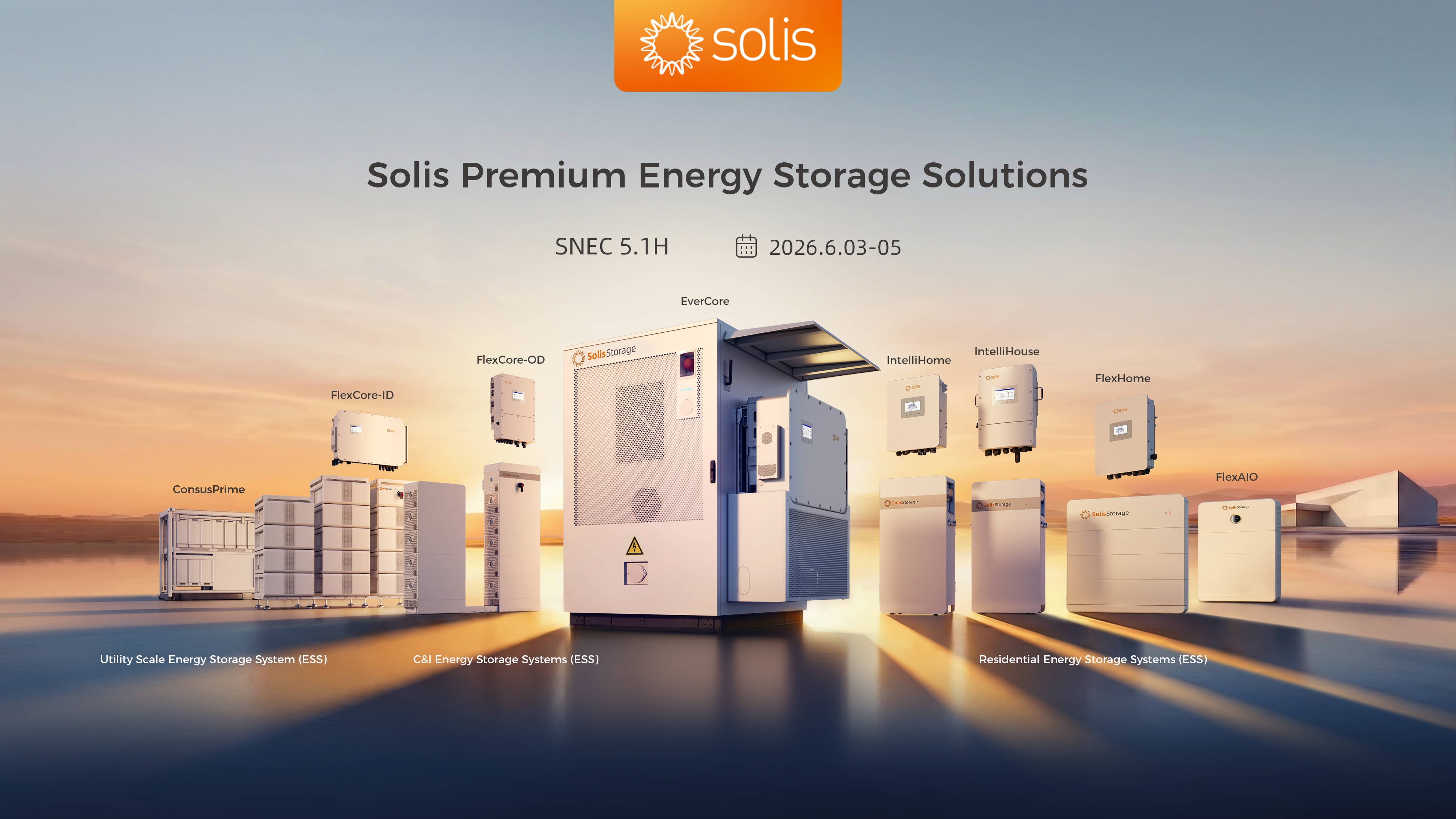
Ginlong (Solis) corporate main products are listed as residential energy storage systems, C&I energy storage systems and utility-scale energy storage systems. The detailed product files supplied for this review identify three named energy storage products: IntelliHome, FlexCore-ID and EverCore.
| BESS Segment | Product | Representative Listed Specification |
|---|---|---|
| Residential / Home Energy Storage | IntelliHome | LiFePO4; nominal capacity 5kWh; working voltage 44.8-57.6V; rated cell capacity 100Ah; recommended charge/discharge current 50A; cycle life >6000 cycles / 10 years; IP66 |
| Stackable Energy Storage / Small Commercial and Mixed Use | FlexCore-ID | Battery pack model FlexCore-ID-BAT20kWh; LFP; cell 314Ah; cell cycle life 25±2°C, 0.5P, EOL70%≥8000 |
| C&I / Renewable and Grid-Related Energy Storage | EverCore ESS | Rated energy capacity 100.5kWh / 120.6kWh / 261.2kWh; inverter power 50kW / 60kW / 125kW; EVE LFP 3.2V 314Ah; cell cycle life 8000; IP55 cabinet + IP66 inverter |
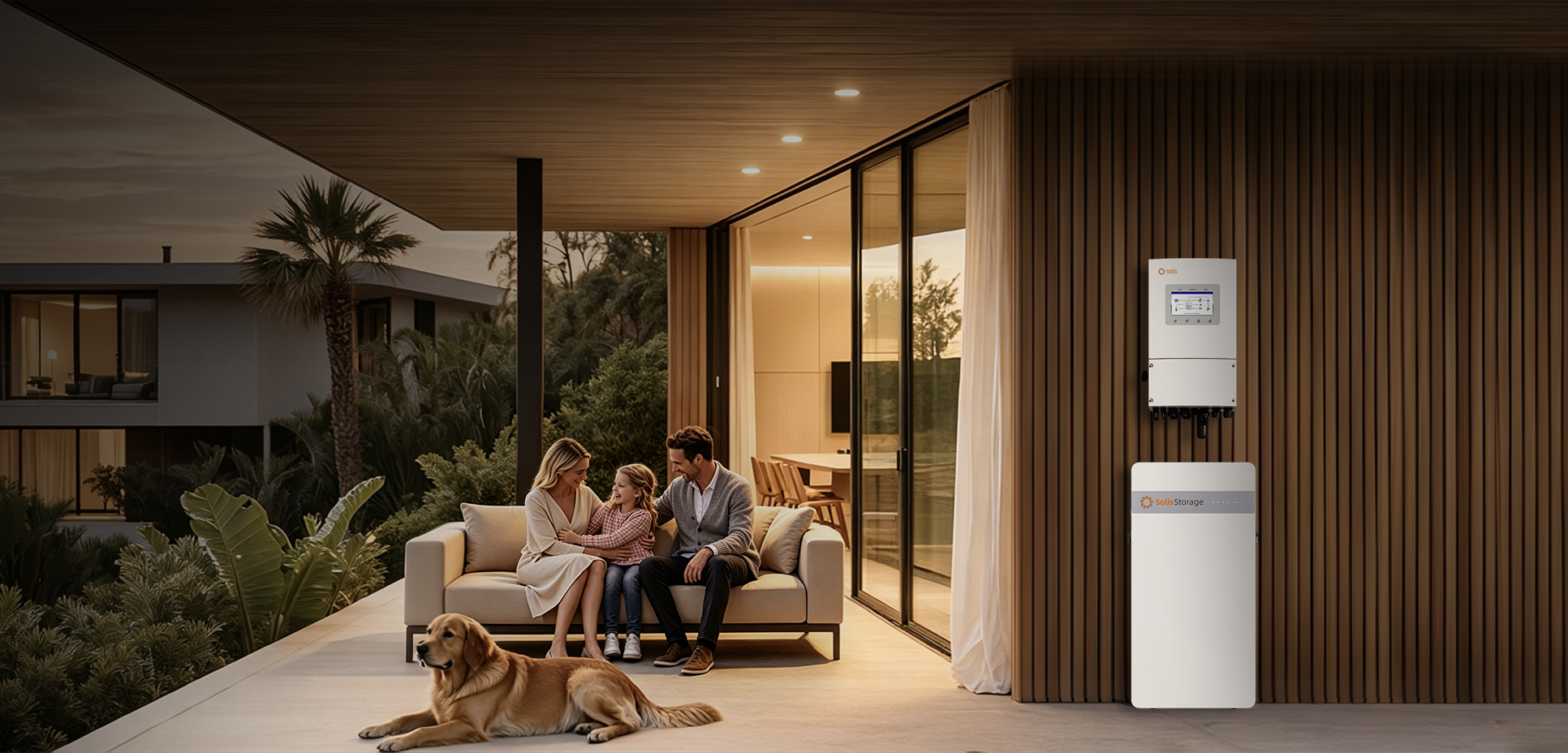
IntelliHome: Residential BESS for Household Applications
IntelliHome is the residential energy storage model in the supplied product data. It uses lithium iron phosphate cells and an aluminium alloy casing. The nominal capacity is 5kWh, with a rated cell capacity of 100Ah and operating voltage of 44.8V to 57.6V. Recommended charge and discharge current is 50A. The listed cycle life is more than 6,000 cycles or 10 years, and the ingress protection rating is IP66. The applicable industry is described as residential or household energy storage.
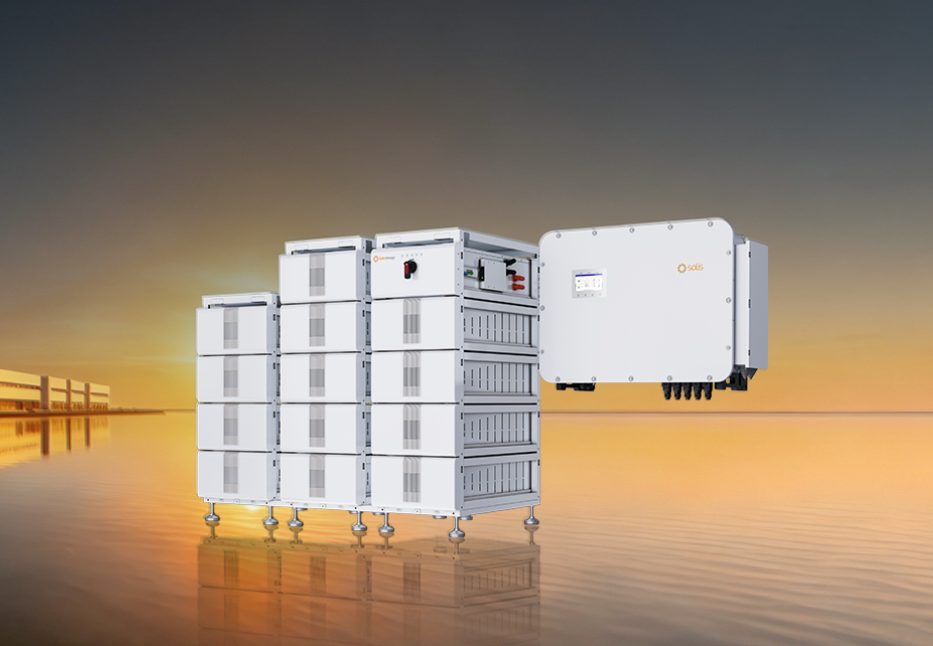
FlexCore-ID: Stackable ESS for Farms, Hospitals and Small Industrial Users
FlexCore-ID is listed as a stackable energy storage system. The battery pack model is FlexCore-ID-BAT20kWh, with LFP cells and a 314Ah cell rating. The specified cell cycle life is at least 8,000 cycles at 25±2°C and 0.5P with EOL70%. Application industries in the product data include small farms, shopping malls, hospitals, large residences and small industrial and commercial enterprises. FlexCore-ID therefore broadens the SolisStorage range beyond pure home storage into light commercial and mixed-use sites.
EverCore ESS: C&I BESS and Grid-Facing Projects
EverCore is the most detailed C&I energy storage platform in the supplied files. It is available in rated energy capacities of 100.5kWh, 120.6kWh and 261.2kWh, with inverter power ratings of 50kW, 60kW and 125kW. The cell is an EVE LFP 3.2V / 314Ah cell with a cycle life of 8,000 cycles. Protection ratings are IP55 for the battery cabinet and IP66 for the inverter.
Application data places EverCore within the renewable energy and power grid industry, including renewable power plants, utility companies, commercial and industrial users, and residential users. Listed project types include energy storage system integration, grid stability retrofitting, peak shaving or frequency regulation projects, and Virtual Power Plant-related projects. The described functions include peak load shifting, backup power supply and increased self-consumption of PV power. Operation modes include 24/7 continuous operation, grid-tied mode, off-grid mode and seamless backup switching. The same application record cites challenging operating environments such as wide temperature ranges, coastal salt fog, high altitude, household outdoor installations and industrial outdoor installations.
3. EverCore Engineering: What the Official Technical Description Shows
The EverCore technical narrative in the supplied corporate material is more detailed than the basic datasheet. The following points are taken from that official description and should be read as SolisStorage engineering claims.
AC-DC Separation Architecture
EverCore uses physical separation of AC and DC sides. The hybrid energy storage inverter sits in its own space while the battery cabinet sits separately. The company reports several outcomes from this design: roughly 6kW of inverter heat can be dissipated to ambient air, leaving only about 3.5kW of electrochemical heat inside the battery cabinet. That thermal separation is said to keep cell temperature uniformity close to liquid-cooled designs while retaining air cooling.
Protection separation is another claimed benefit. The inverter achieves IP66 while the battery cabinet maintains IP55. The company estimates that this separated design lowers the system full-lifecycle failure rate by 50%. Structural separation also supports DC-side expansion; one inverter can connect to up to six battery cabinets, allowing storage capacity to be expanded without additional inverter investment. The company estimates this can reduce system expansion cost by approximately 10%..
Integrated 125kW Hybrid Inverter
EverCore integrates PCS, STS, PV inverter, circuit breaker protection and EMS into one hybrid inverter unit, with single-unit power up to 125kW. In the official description, this architecture achieves grid-tied and off-grid switching in less than 10ms without an external STS. It does not require an external PV inverter and supports both DC and AC coupling with existing PV systems. The permitted PV over-sizing ratio is up to 200%.
Control architecture is also simplified. Traditional systems often use separate CPUs for BMS, PCS, EMS and STS, creating multi-node communication risks. EverCore uses a single central controller for centralised system management, reducing failure points and making fault location faster.
Air Cooling and Climate Robustness
EverCore keeps an air-cooled design for 125kW / 261kWh C&I systems. The company describes a three-air-duct design using a patented diversion air duct and Coanda-effect airflow to improve air penetration across battery surfaces. The stated result is 30% higher heat-dissipation efficiency compared with traditional air cooling. With IP66 and IP55 protection and C4-grade anti-corrosion coating standards, EverCore is specified by the company for operation from -25°C to 55°C and at altitudes up to 4,000 metres.
Full-Lifecycle Operation and Maintenance Costs
The official material highlights lifecycle O&M costs as well as initial CAPEX. Using industry-experience-based comparisons, SolisStorage estimates EverCore can save about €9,500 per unit over the full project lifecycle. That figure is composed of €2,500 saved from eliminating liquid cooling fluid replacement, €1,500 from simplified PCS replacement, €1,500 from simplified pack replacement, and €4,000 from reduced routine inspection complexity. Component choices also target lower maintenance: Minebea cooling fans are described as having 10-year maintenance-free performance, and Honeywell industrial-grade flammable gas detectors are described as calibration-free for 10 years.
Safety Design and Battery Cells
EverCore is described as having a 15-layer, three-dimensional protection system covering cell, pack and system level. Thermal insulation materials resistant to 1,000°C are placed between packs to slow lateral thermal runaway spread. Fire suppression uses a three-stage approach: pack-level aerosol, cabinet-level aerosol and fire-fighting water channels.
Battery cell selection is part of that safety story. EverCore uses A-grade 314Ah LFP cells developed for C&I applications. The official comparison with standard 280Ah cells reports internal resistance of 0.15±0.05mΩ versus 0.17mΩ, and cycle life of 8,000 cycles at 0.5C with remaining capacity of at least 70%, against 7,000 cycles for traditional 280Ah cells. The company states that every 10% reduction in internal resistance reduces charge-discharge heat generation by about 20%, and that the cell life extension moves the economic lifecycle from roughly 14 years to 16 years based on 500 charge-discharge cycles per year.
Software Ecosystem for European Energy Markets
The EverCore description stresses open software. SolisStorage says it has built this ecosystem based on operation experience across more than 300,000 energy storage sites worldwide. To date, EverCore has been connected to, or is in the process of connecting to, 102 third-party VPP or EMS operators across 11 European countries. Representative cases include integration with the Kraken platform associated with Octopus Energy in the UK, connection to mainstream aggregator platforms such as Check Watt in the Nordic region, and connections to local EMS providers in German-speaking countries and the Benelux region.
Solis also provides the Solis AI Cloud Platform, which the company says is deployed at more than 5,500 energy storage power stations worldwide. The platform integrates Nordpool wholesale electricity price data and Flatpeak retail electricity price data to support minute-level optimisation of charge and discharge strategy. In one company-reported residential storage project in Latvia, Solis AI optimisation increased annual electricity bill savings by 302.6%..
4. Manufacturing, R&D and Global Supply Base
Ginlong (Solis) has used its solar inverter manufacturing base to enter the energy storage business. Corporate data lists a factory area of 98,114.69 m², more than 5,000 employees, more than 1,000 R&D staff and 80GW annual output. The company also says its inverter products have evolved through seven generations of inverter technology and that it works with advanced R&D platforms, national research centres and collaborating universities or scientific institutions.
Quality evidence is linked to inverter reliability heritage. The corporate profile states that Solis has been named a Top Inverter Brand by EuPD Research for eleven consecutive years and was the first inverter manufacturer globally to receive a reliability test report from PVEL. While those awards focus on inverters, they are relevant to BESS buyers because the inverter is the central power conversion device in a storage system.
From a supply-chain perspective, the company reports an export ratio of 70% and lists major markets in Europe, Africa including South Africa, the Middle East and Central Asia, and South Asia. The corporate profile also references a global network of offices and technical service centres across Europe, the Americas, Asia-Pacific and Africa. For procurement teams, this type of footprint affects service response, spare part planning and project commissioning expectations.
5. Market Evidence and Industry Recognition
The supplied evidence base is primarily company-published. Still, several points can help buyers frame further due diligence.
First, EuPD Research has recognised Solis as a Top Inverter Brand for eleven consecutive years, according to the corporate profile. EuPD Research is an established industry research institution, and repeated brand recognition is relevant when checking long-term market standing.
Second, the company states that it was the first inverter manufacturer globally to receive a reliability test report from PVEL. PVEL testing is often used by solar and storage buyers as a reliability benchmark, so this is a useful reference point for quality investigation.
Third, market reach is shown by the corporate claim of products used in more than 100 countries and regions. In Europe, the EverCore ecosystem connections to Kraken, Check Watt and local EMS providers provide a tangible platform-level signal for buyers evaluating VPP participation, energy trading and demand response capability.
No customer testimonials or named energy storage case owners were included in the supplied data. The article therefore does not invent client references. The Latvia project is included here as a company-reported application example, not as an independently verified case study.
6. What Buyers Should Add to a BESS Shortlist
The purpose of this section is not to rank Ginlong (Solis) above any competitor. It identifies the verified points that a buyer can carry forward into a structured BESS supplier comparison.
- Listed-company scale: Ginlong (Solis) is a Shenzhen-listed group founded in 2005, with more than 5,000 employees and a reported annual output of 80GW. This scale matters for supply continuity and long-term warranty planning.
- Multi-segment ESS coverage: The portfolio includes residential energy storage, stackable ESS, C&I systems and utility-scale energy storage in its corporate main products. Suppliers that cover multiple BESS segments may simplify panel approval and procurement processes.
- In-house power electronics and integration: SolisStorage says it has internal capabilities across PCS, EMS and system integration. That reduces dependency on multiple system integrators and supports complete-solution responsibility.
- Engineering focus on total lifecycle: The EverCore design details for air cooling, O&M simplification, high-IP protection, battery cycle life and software integration give engineers concrete review material before an RFP.
- Open software and VPP readiness: EverCore connections with 102 third-party VPP or EMS operators across 11 European countries, plus Solis AI Cloud, are relevant for buyers whose revenue plan includes load shifting, peak shaving or grid services.
- Global service route: With 70% export and service locations across Europe, the Americas, Asia-Pacific, Africa and other regions, the company offers a more international support picture than many single-country ESS providers.
7. Conclusion: Ginlong (Solis) as a Company to Include in BESS Due Diligence
For buyers starting their BESS research, Ginlong (Solis) Technologies provides a broad and reasonably transparent corporate case. The company combines a solar inverter heritage going back to 2005, a Shenzhen listing from 2019, substantial manufacturing scale and a dedicated SolisStorage business for ESS. Product files show residential, stackable and C&I systems with specific technical data, and EverCore communicates a clear engineering philosophy around separation, air cooling, safety, lifecycle cost and software openness.
The main limitation is that most performance claims are company-reported. Independent items such as EuPD Research brand recognition and PVEL reliability testing are helpful, but they are not substitutes for project-specific validation, bank references or technical tests conducted by the buyer. A final shortlist decision should include direct specification review, sample or factory audit planning and comparison with other qualified BESS suppliers.
Next step for procurement teams: Download the Solis Global Brochure for more product and company details. Direct inquiries can be sent to sales@ginlong.com or directed to the official website www.solisinverters.com.
Frequently Asked Questions
What is Ginlong (Solis) Technologies?
Ginlong (Solis) Technologies Co., Ltd. is a Shenzhen-listed company founded in 2005. It supplies solar inverters and energy storage system solutions through the Solis brand and the SolisStorage energy storage business. Its corporate profile reports more than 5,000 employees, more than 1,000 R&D staff and products used in more than 100 countries and regions.
Does Ginlong (Solis) manufacture battery energy storage systems?
Yes. SolisStorage is described as the dedicated energy storage subsidiary of Solis (Ginlong Technologies). Its portfolio spans residential energy storage, C&I energy storage and utility-scale energy storage. Named product examples include IntelliHome for residential use, FlexCore-ID for stackable applications, and EverCore ESS for C&I and grid-related projects.
Which BESS products are included in the official product data?
The detailed official product data covers IntelliHome, FlexCore-ID and EverCore. IntelliHome is a residential ESS with a 5kWh LiFePO4 battery. FlexCore-ID is a stackable ESS with an LFP 314Ah cell. EverCore is a C&I ESS platform with 100.5kWh, 120.6kWh or 261.2kWh rated energy capacity and inverter ratings of 50kW, 60kW or 125kW.
Which markets does Ginlong (Solis) serve?
According to corporate data, the main markets are Europe, Africa including South Africa, the Middle East and Central Asia, and South Asia. The company also reports an export ratio of 70% and says its products are used in more than 100 countries and regions worldwide.
What independent recognition is cited for Solis?
The corporate profile states that Solis was named a Top Inverter Brand by EuPD Research for eleven consecutive years and was the first inverter manufacturer globally to receive a reliability test report from PVEL. The profile does not provide certificate numbers or newer independent storage-system certifications.
Analyst note: This review is based on company-provided corporate and product materials. Buyers should verify technical claims through documentation, sample testing or independent project references before purchase.
Have Questions or Need More Details?
Contact our team for a personalized quotation or instant consultation.
Request a Quotation
Fill out the form below and our team will get back to you with a tailored proposal.
WhatsApp Direct Chat
Prefer to chat in real-time? Message us on WhatsApp for instant assistance & quick answers.
- Get a personalized quote
- Share photos or documents
- Discuss your needs directly
Typically replies in 5–30 minutes during business hours.