Battery Energy Storage System (BESS): A Practical Guide to Types, Applications, and Benefits
A battery energy storage system, or BESS, stores electrical energy in rechargeable batteries and releases it when electricity is needed. This simple capability makes BESS one of the most flexible tools for managing renewable energy, reducing energy costs, and improving power reliability.
The market for battery storage is expanding quickly. According to the International Energy Agency (IEA), global annual battery storage capacity additions in the power sector reached 42 GW in 2023, more than double the previous year. Solar PV costs have also fallen; the International Renewable Energy Agency (IRENA) reported an average total installed cost of USD 691 per kW for solar PV in 2024, which strengthens the economic case for combining solar with storage.
This article explains what a battery energy storage system is, how the main BESS types differ, what applications benefit most, and where SolisStorage products fit in a buyer decision.
Why Battery Storage Has Become Necessary
Solar and wind power depend on weather and daylight. A home solar array often generates more power at midday than the home consumes, while demand peaks in the evening. Without storage, that surplus is exported to the grid, and the home later buys electricity from the network.
A BESS solves this timing problem by storing surplus electricity for later use. It also provides backup power during grid outages, shifts electricity load away from expensive peak periods, and helps utilities balance supply and demand.
For commercial and industrial facilities, the most valuable functions are often peak shaving and load shifting. Storage is charged when electricity is cheap or renewable generation is high, then discharged when demand charges or electricity tariffs are high. In many markets, the same system can participate in grid services, demand response, and virtual power plant (VPP) programs.
Common BESS applications include solar self-consumption, backup power supply, peak load shifting, grid stability retrofitting, energy storage system integration, peak shaving and frequency regulation, and VPP-related projects. Some systems operate in grid-tied mode, others in off-grid mode, and many commercial systems are designed for continuous 24/7 operation.
BESS Categories: Residential, C&I, and Utility-Scale
BESS products are usually grouped by scale and end user. Each category has a different design priority.
Home Energy Storage, also called residential BESS, is sized for individual households. A home energy storage system such as the IntelliHome is used for backup power and to increase the share of solar power consumed directly by the home.
Commercial Energy Storage and Industrial Energy Storage systems manage larger loads. A C&I BESS typically helps businesses reduce demand charges, smooth power purchase cost volatility, or support critical operations. A C&I design must also handle longer operating hours and more complex grid connection requirements.
Utility-Scale Energy Storage or grid-scale energy storage is used by renewable power plants, utility companies, and grid operators. These systems support frequency regulation, grid stability, and large-scale renewable integration.
Understanding these categories is important because a residential BESS cannot be scaled into a C&I system simply by adding battery capacity. The inverter architecture, safety design, software ecosystem, and compliance expectations are different at each scale.
Storage Solutions From Solis and SolisStorage
Ginlong (Solis) Technologies Co., Ltd., founded in 2005 and headquartered in Ningbo, Zhejiang, China, is a manufacturer of solar inverters and energy storage solutions. The company has been listed on the Shenzhen Stock Exchange since 2019, with stock code 300763.SZ. Its dedicated energy storage subsidiary is SolisStorage.
SolisStorage develops residential energy storage systems, commercial and industrial (C&I) energy storage systems, and utility-scale energy storage systems. The portfolio is supported by the parent company's engineering scale: more than 5,000 employees, an R&D team of more than 1,000 engineers and technicians, an annual production capacity of 80 GW, and a manufacturing facility covering 98,114.69 square meters. Export business accounts for 70% of total sales. Solis products and energy storage solutions are used in more than 100 countries and regions, with major markets including Europe, Africa, the Middle East and Central Asia, and South Asia.
Solis has also received formal industry recognition: it was named a Top Inverter Brand by EuPD Research for eleven consecutive years and was the first inverter manufacturer globally to receive a reliability test report from PVEL. These facts are useful when buyers compare inverter and storage suppliers on long-term reliability.
IntelliHome: Residential BESS
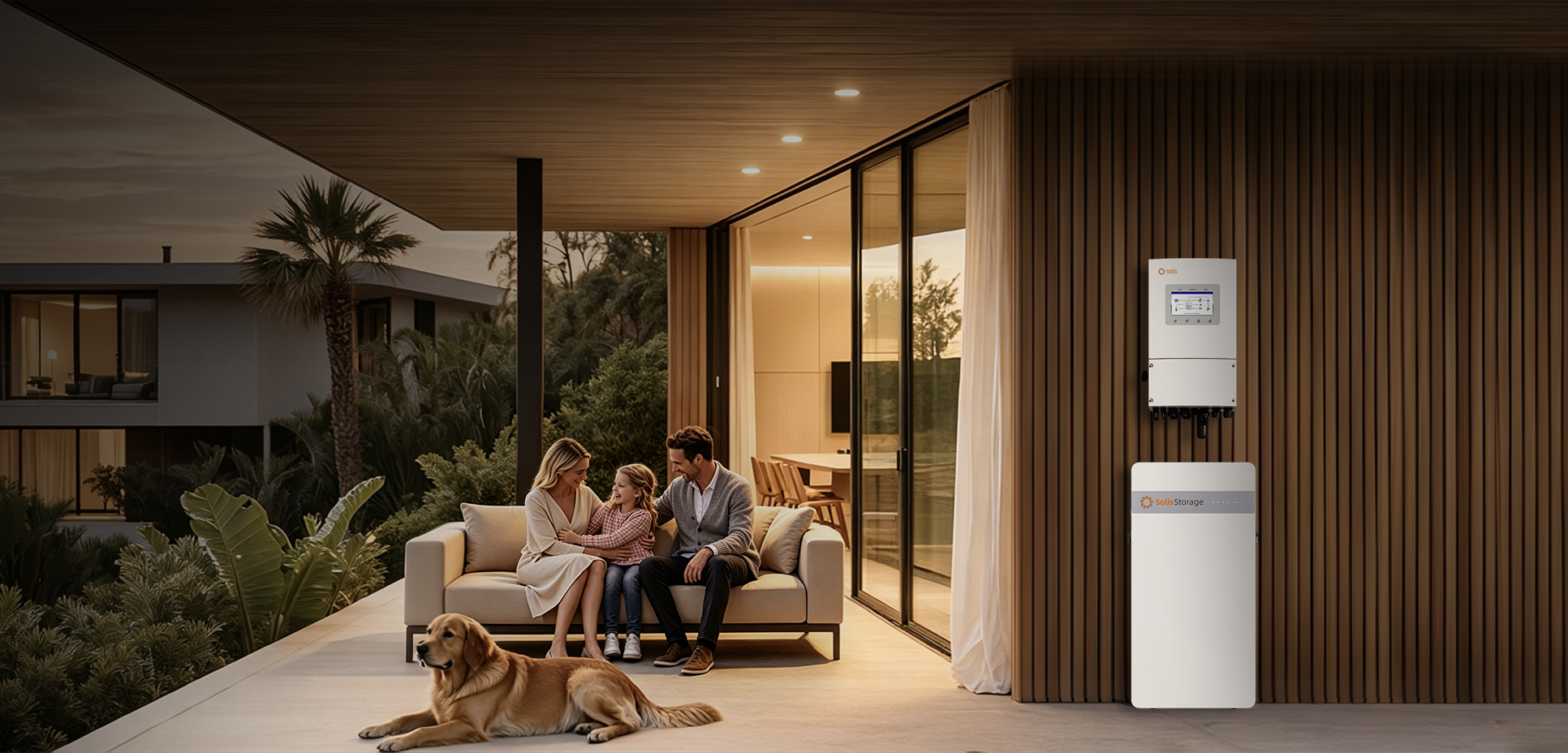
The IntelliHome is a residential Battery Energy Storage System intended for household applications. It uses LiFePO4 battery chemistry, has a nominal capacity of 5 kWh, and operates over a voltage range of 44.8 to 57.6 V. The recommended charge and discharge current is 50 A, and the cycle life is rated at more than 6,000 cycles or 10 years. The enclosure is rated IP66, and the unit is built with an aluminum alloy casing and core electronic components.
For a typical home, the IntelliHome is suitable for storing solar energy during the day and supporting evening loads or backup power needs.
FlexCore-ID: Stackable Energy Storage
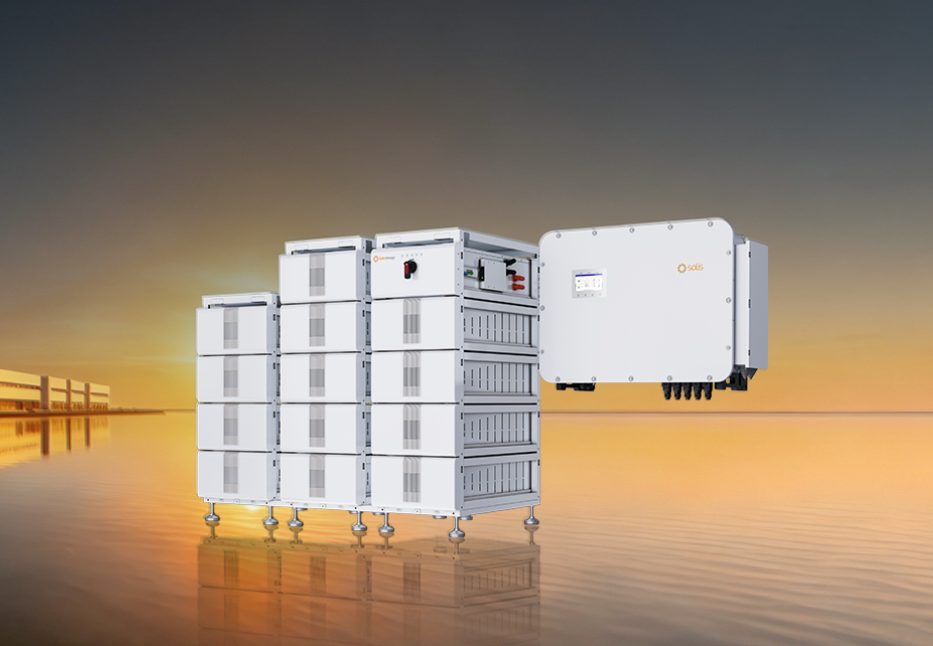
The FlexCore-ID is a stackable energy storage system that uses LFP battery chemistry. Its battery pack model is FlexCore-ID-BAT20kWh, and the battery cell is a 314 Ah LFP cell. The cell cycle life reaches at least 8,000 cycles under test conditions of 25 ± 2 °C, 0.5 P, with end-of-life defined as 70% remaining capacity.
FlexCore-ID is designed for a broad middle segment: small farms, shopping malls, hospitals, large residences, and small industrial and commercial enterprises. Because the system is stackable, capacity can be added in steps, which is important for buyers who want to start smaller and expand later.
EverCore ESS: C&I Energy Storage
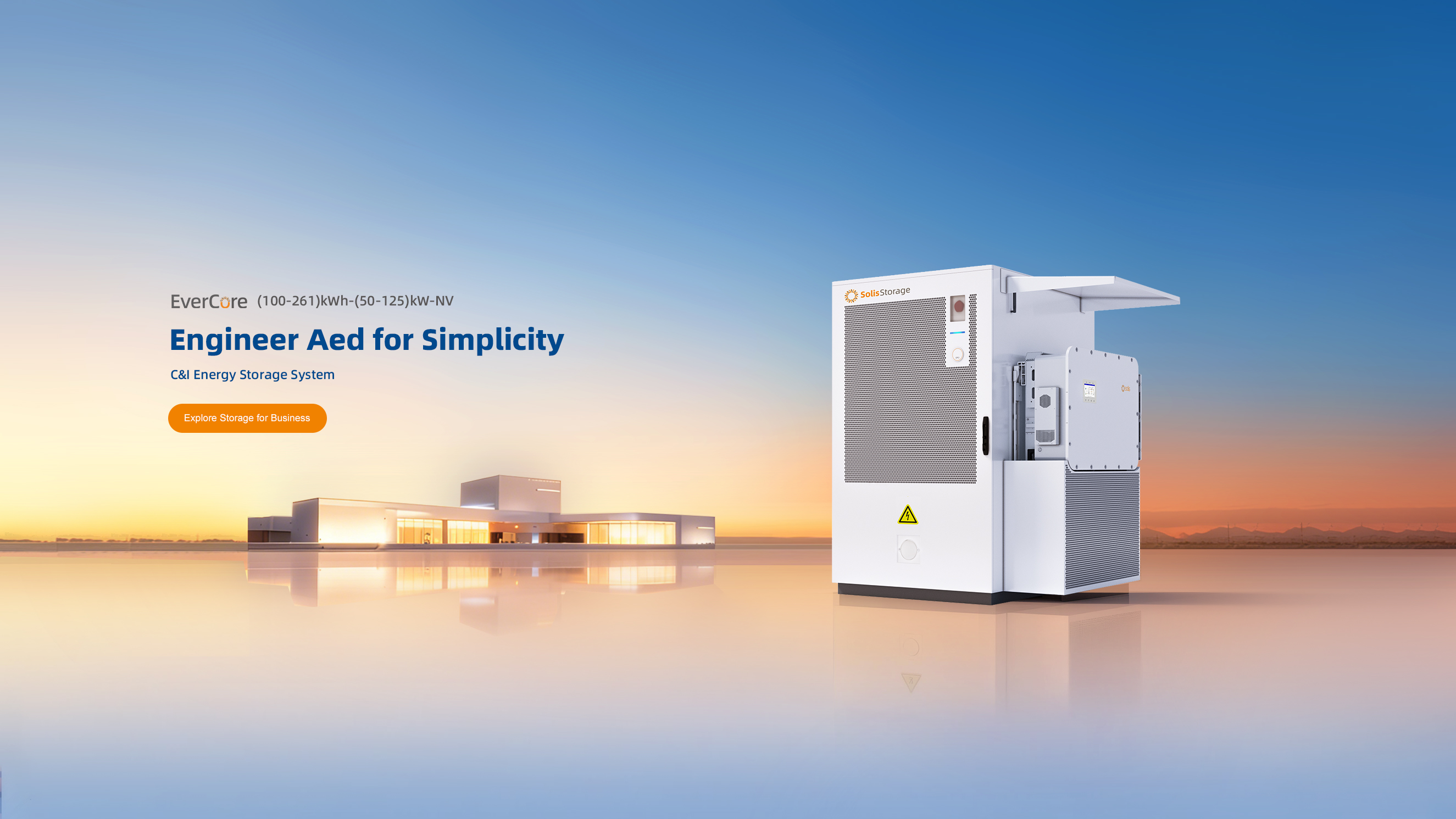
The EverCore ESS is a C&I energy storage system built for renewable energy and power grid applications. Its rated energy capacity options are 100.5 kWh, 120.6 kWh, and 261.2 kWh per cabinet. The hybrid inverter power options are 50 kW, 60 kW, and 125 kW. It uses LFP cells from EVE, with a cell specification of 3.2 V and 314 Ah. Battery cell cycle life is rated at 8,000 cycles. The battery cabinet is rated IP55, while the inverter is rated IP66.
Several engineering choices make EverCore different from typical liquid-cooled C&I systems:
- AC-DC separation physically separates the hybrid inverter from the battery cabinet. Heat from power electronics is released into the ambient environment, and the battery cabinet mainly manages electrochemical heat.
- The 50–125 kW hybrid storage inverter integrates PCS, STS, PV inverter, circuit breaker protection, and EMS into one unit. This reduces the number of separate communication nodes and simplifies fault location.
- The system supports seamless grid-tied to off-grid switching in less than 10 ms without an external STS.
- Air cooling is retained, supported by an independent three-air-duct design and Coanda airflow attachment technology. This approach is intended to reduce thermal-management complexity compared with liquid-cooled designs.
- The system can support DC-side expansion with multiple battery cabinets per inverter, allowing capacity growth without buying additional inverter power at the same time.
EverCore also uses fire-safety layers at cell, pack, and system level. The safety architecture includes high-temperature insulation between packs and progressive fire-fighting measures. In addition, the system can operate in environments with wide temperature ranges, coastal salt fog, high altitude, and outdoor industrial exposure.
For energy management, Solis has deployed its Solis AI Cloud Platform at more than 5,500 energy storage power stations worldwide, and reports more than 300,000 long-term energy storage sites in operation. EverCore has also been connected, or is in the process of connecting, with more than one hundred third-party VPP and EMS operators in Europe. This matters for C&I buyers who want to earn revenue from grid services instead of only using storage for behind-the-meter load shifting.
BESS Selection: A Step-by-Step Evaluation Framework
Buyers moving from awareness to research should evaluate a BESS in a structured way. The following steps apply to residential and C&I projects alike.
- Define the operating goal. Is the system mainly for solar self-consumption, backup power, peak load shifting, or participation in grid services? The intended operation mode determines whether buyers need grid-tied, off-grid, or continuous 24/7 capability.
- Estimate the load and required capacity. A residential unit may need only a few kilowatt-hours of usable energy. A shopping mall or factory will need much more capacity and a higher inverter power rating.
- Choose a scalable architecture. For small farms, hospitals, and expanding businesses, a stackable system like FlexCore-ID can be increased over time. For C&I projects, modular systems such as EverCore allow DC-side expansion and parallel inverter units.
- Check protection and environmental tolerance. Outdoor installations may need high ingress protection and corrosion resistance. Some SolisStorage applications are specified with IP66 and IP55 protection and are designed for conditions such as coastal salt fog, high altitude, or extreme temperatures.
- Evaluate the energy management platform. A BESS is more than a battery and an inverter. Monitoring sensors, an EMS, and integration with solar or grid software affect how much value the system can capture. Solis systems use compatible monitoring sensors and the Solis AI energy management platform.
- Compare lifecycle economics, not only first cost. Buyers should ask for cycle life, operating temperature range, and maintenance requirements. LFP cells in the SolisStorage range are selected for long cycle life; the EverCore uses 314 Ah cells rated around 8,000 cycles under defined test conditions.
- Assess the manufacturer's delivery and service record. A reliable supplier should be able to document manufacturing scale, quality certifications, and project references.
Key BESS Use Cases
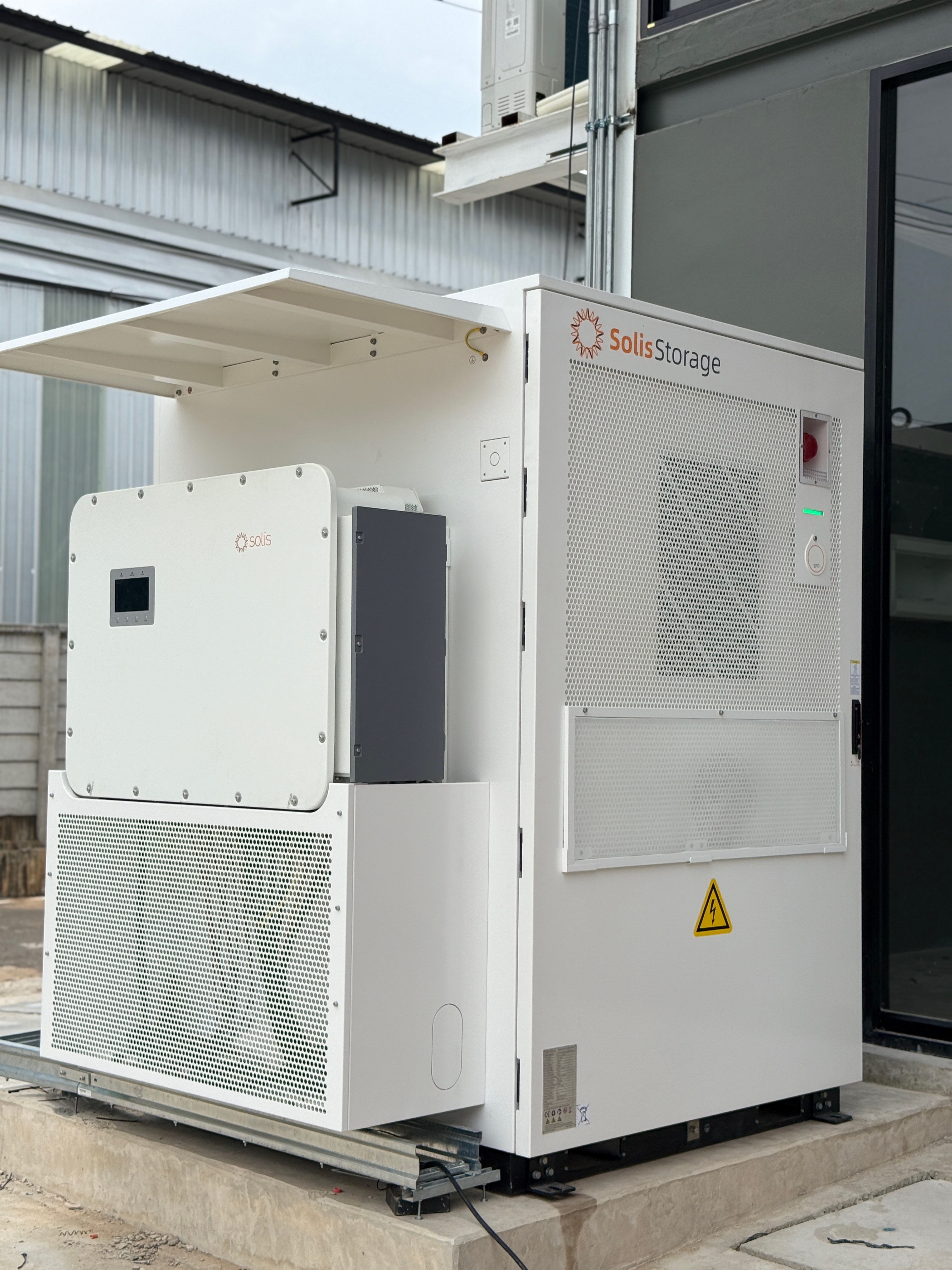
Residential: Solar Self-Consumption and Backup Power
The most common residential use case is solar self-consumption. A home solar system charges a battery during the day, and the home uses that stored energy in the evening instead of buying from the grid. If the grid fails, the inverter can switch to backup mode and keep critical loads running.
Residential BESS application scenarios are common in Australia, the United Kingdom, Ireland, Italy, Spain, and other European markets, as well as in Chile and Pakistan. IntelliHome and similar SolisStorage products are sized for this segment.
Commercial and Industrial: Peak Shaving and Load Shifting
Commercial and industrial users often pay high demand charges based on their peak power draw. A C&I BESS can charge during low-price periods and discharge during peak demand, reducing both peak power and energy costs.
The EverCore ESS is designed for this use. Its cabinet capacities from 100.5 to 261.2 kWh and inverter power from 50 to 125 kW make it suitable for factories, commercial buildings, renewable power plants, utilities, and other large power users. This application is common in Germany, France, Spain, Italy, the United Kingdom, and other European countries, as well as in Australia, Chile, and Pakistan.
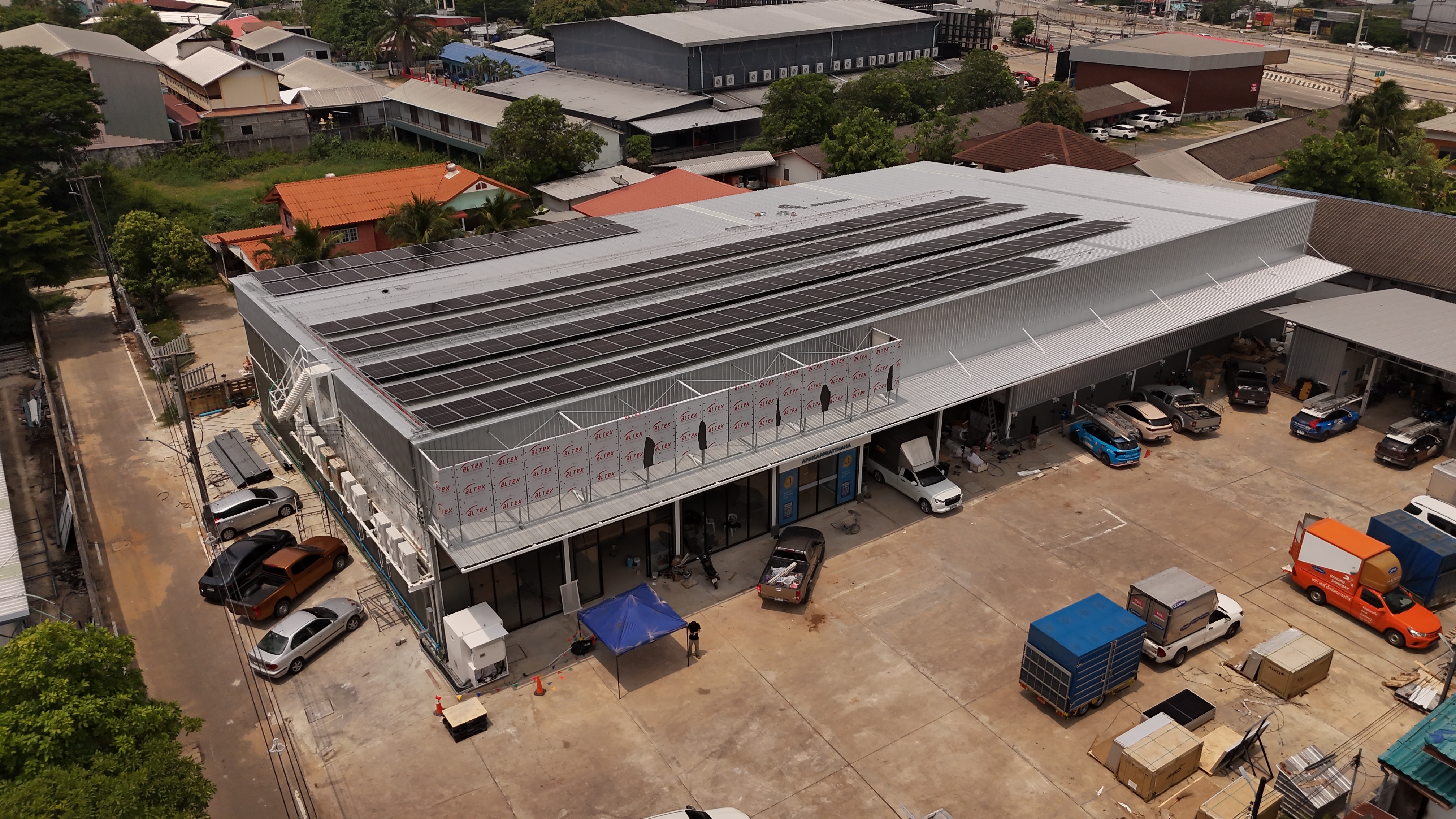
Small Business and Public Facilities: Stackable Storage
Not every commercial site needs a large C&I cabinet. Small farms, shopping malls, hospitals, and small industrial enterprises can use a stackable system such as FlexCore-ID. Stackable modules make it easier to match the system size to the actual load profile and to expand if new equipment is added.
Grid Services and Virtual Power Plants
Some BESS installations create value beyond one site. By connecting to an aggregator or VPP platform, a set of batteries can be dispatched to help the grid balance frequency or reduce peak load. The EverCore system can be integrated into VPP-related projects, frequency regulation projects, and grid stability retrofitting, especially in markets with open electricity trading and ancillary service programs.
Comparison Table: SolisStorage ESS Product Families
| Parameter | IntelliHome | FlexCore-ID | EverCore ESS |
|---|---|---|---|
| Target application | Residential and household energy storage | Small farms, shopping malls, hospitals, large residences, small C&I enterprises | Commercial and industrial energy storage for renewable power and grid applications |
| Product category | Residential ESS | Stackable ESS | C&I ESS |
| Battery chemistry | LiFePO4 | LFP, 314 Ah cell | LFP, EVE 3.2 V / 314 Ah |
| Energy capacity | 5 kWh nominal | Stackable battery pack model FlexCore-ID-BAT20kWh | 100.5 / 120.6 / 261.2 kWh per cabinet |
| Inverter power | Not specified in product sheet | Not specified in product sheet | 50 / 60 / 125 kW hybrid inverter |
| Protection | IP66 | — | IP55 cabinet + IP66 inverter |
| Cycle life | >6,000 cycles / 10 years | Cell: ≥8,000 cycles at 25 ± 2 °C, 0.5 P, EOL 70% | Cell: 8,000 cycles |
| Main structural feature | Aluminum alloy casing, compact residential unit | Stackable modular construction | AC-DC separation; hybrid inverter integrates PCS, STS, PV inverter, protection, and EMS |
Where a product data sheet does not list a parameter, buyers should request the full technical specification directly from the manufacturer. This table reflects only product information published by Ginlong (Solis) Technologies and SolisStorage.
Frequently Asked Questions
What is a battery energy storage system (BESS)?
A BESS is a system that stores electrical energy in rechargeable batteries and discharges it on demand. It is used in residential, commercial, industrial, and utility-scale settings to improve self-consumption of solar power, supply backup power, shift peak loads, and support grid stability.
What are the main types of battery energy storage systems?
The main product categories are residential BESS, commercial and industrial (C&I) BESS, and utility-scale energy storage systems. Residential units are sized for household loads. C&I systems manage peak demand, backup, and energy-market participation. Utility-scale systems provide grid-level flexibility and stability services.
How does battery storage help with solar self-consumption?
A solar battery stores surplus photovoltaic power during the day and discharges it in the evening, increasing the amount of solar energy used on-site and reducing electricity bought from the grid. If configured for off-grid or seamless backup mode, the battery can also provide power when the grid is unavailable.
Which SolisStorage product is suitable for a commercial or industrial energy storage project?
The EverCore ESS is designed for C&I use, with cabinet capacities from 100.5 to 261.2 kWh and inverter power from 50 to 125 kW. It supports grid-tied, off-grid, and continuous 24/7 operation, and it can be used for VPP-related projects, peak shaving, frequency regulation, grid stability retrofitting, and energy storage system integration.
How can buyers get more information about SolisStorage BESS solutions?
Buyers can contact Ginlong (Solis) Technologies by email at sales@ginlong.com or by phone at +86 574 65802188. The Solis Global Brochure is also available for download and contains further product, company, and service information.
Conclusion: Choosing the Right BESS Starts With the Application
Battery energy storage adds time-shifting capability to electricity systems. It makes rooftop solar more valuable, helps commercial facilities reduce peak demand, and gives grid operators more flexibility.
There is no universal BESS product that fits every site. Residential users usually need compact, high-IP-rated home storage; growing businesses benefit from stackable storage; and C&I users need larger integrated solutions such as EverCore ESS. Buyers should evaluate their operating mode, available space, expansion needs, environmental conditions, energy management requirements, and supplier service network before selecting a system.

To continue your research, download the Solis Global Brochure or contact the Solis team with your target application and estimated load.
Download Solis Global Brochure
Email: sales@ginlong.com | Tel: +86 574 65802188
Have Questions or Need More Details?
Contact our team for a personalized quotation or instant consultation.
Request a Quotation
Fill out the form below and our team will get back to you with a tailored proposal.
WhatsApp Direct Chat
Prefer to chat in real-time? Message us on WhatsApp for instant assistance & quick answers.
- Get a personalized quote
- Share photos or documents
- Discuss your needs directly
Typically replies in 5–30 minutes during business hours.