
Residential vs. C&I Energy Storage Systems: SolisStorage Decision Comparison for 2026
Residential vs. C&I Energy Storage Systems: SolisStorage Decision Comparison for 2026
Not sure whether to choose a residential or a commercial and industrial (C&I) energy storage system? The choice depends on your load profile, available space, grid connection, revenue model, and long-term service capacity. This guide compares the two categories side by side and explains the SolisStorage approach to each, so you can make a procurement decision that fits your actual project.
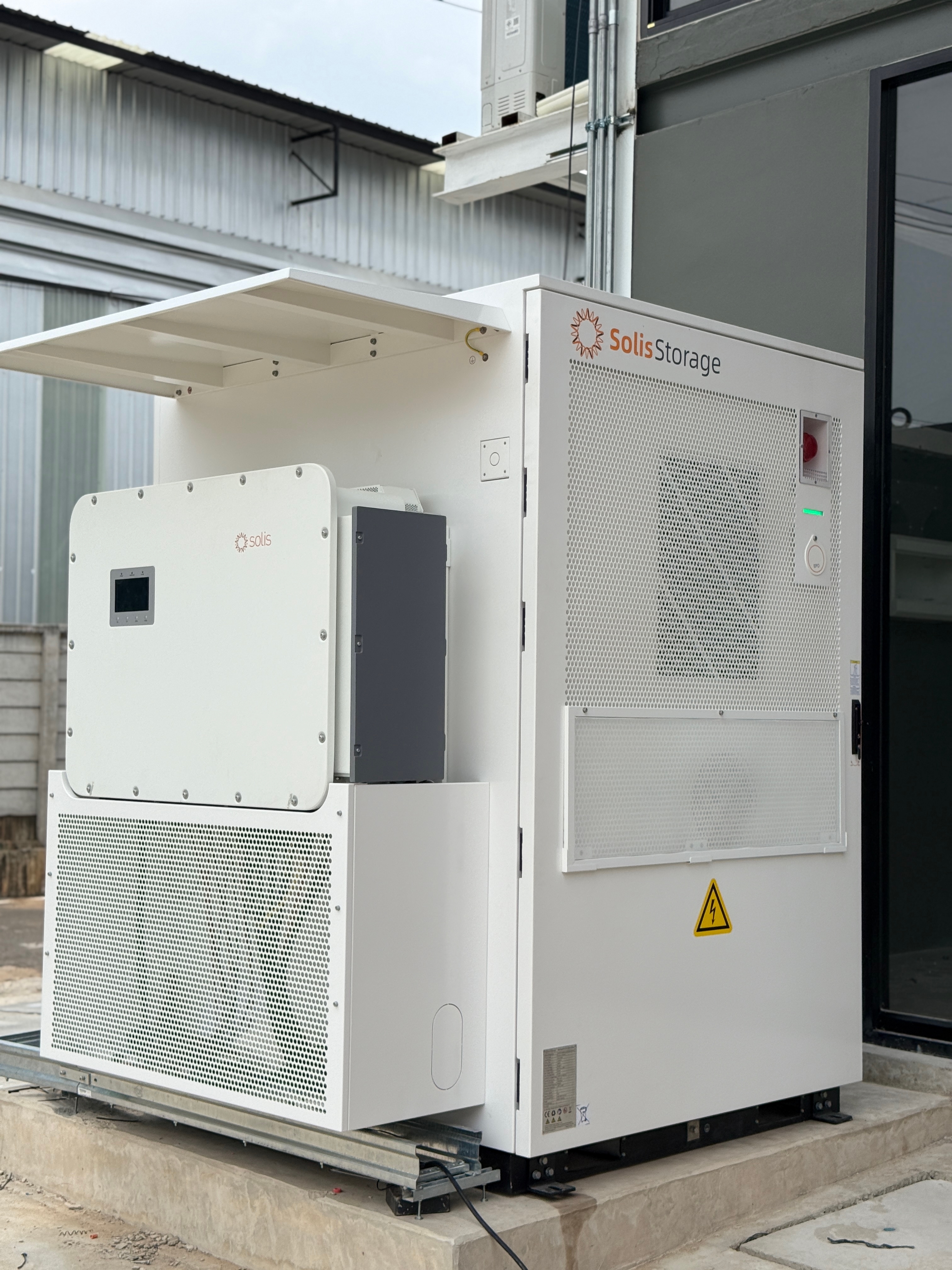
What Is the Difference Between a Residential and a C&I Energy Storage System?
A residential energy storage system is designed for single homes, typically paired with rooftop solar to reduce electricity bills, provide backup power, and increase self-consumption. A C&I energy storage system is designed for factories, commercial buildings, hospitals, cold-chain logistics, and industrial parks, where loads are larger, grid interaction is more complex, and the payback model often involves peak shaving, demand response, or ancillary services.
The fundamental difference is not just size. Residential systems usually integrate the battery and inverter in a compact unit, while C&I systems require more attention to power density, thermal management, protection ratings, system integration, grid codes, and lifecycle maintenance.
Problem Definition: Why Buyers Struggle to Compare Energy Storage Options
Buyers comparing energy storage systems frequently receive quotes that are difficult to benchmark. Each supplier uses different inverter architectures, battery cell formats, cooling methods, safety layers, and software platforms. As a result, comparing a 100 kW system from one manufacturer against a 125 kW system from another is rarely like-for-like.
The most common decision errors include:
- Focusing only on the initial price per kWh and ignoring lifecycle operating costs.
- Choosing a battery size without checking the inverter's expansion capability.
- Underestimating thermal management requirements in high-temperature or high-humidity environments.
- Overlooking compatibility with existing PV systems, grid connection rules, and third-party energy management platforms.
A structured comparison of application type, architecture, performance, safety, maintenance, and ecosystem compatibility helps reduce these risks.
Industry Background: The Energy Storage Market in 2026
Energy storage demand continues to grow across multiple segments. The global energy storage systems market was valued at approximately USD 668.7 billion in 2024 and is projected to reach USD 5.12 trillion by 2034. Long-duration energy storage is also expanding, with a separate market estimate of USD 4.85 billion in 2024 and a projected CAGR of 13.6% through 2030.
Residential storage is growing as well, with the global residential energy storage market estimated to rise from USD 2.69 billion in 2024 to USD 4.58 billion by 2030. In 2024, China's exports of lithium-ion batteries for energy storage and non-automotive uses exceeded USD 65 billion, reflecting the scale of the global supply chain. For buyers, these trends mean a wider range of products, but also a greater need for verifiable technical comparison.
Solis operates in both the residential and C&I segments. Solis (Ginlong Technologies) was ranked as the world's #1 in residential PV inverter shipments in 2023 and the 3rd largest inverter manufacturer globally. SolisStorage, the energy storage subsidiary, offers residential, C&I, and utility-scale systems, with a focus on PCS, EMS, and system integration.
Detailed Solution: Two System Lines, Two Design Priorities
SolisStorage divides its energy storage offering into two practical categories:
Residential Energy Storage Systems
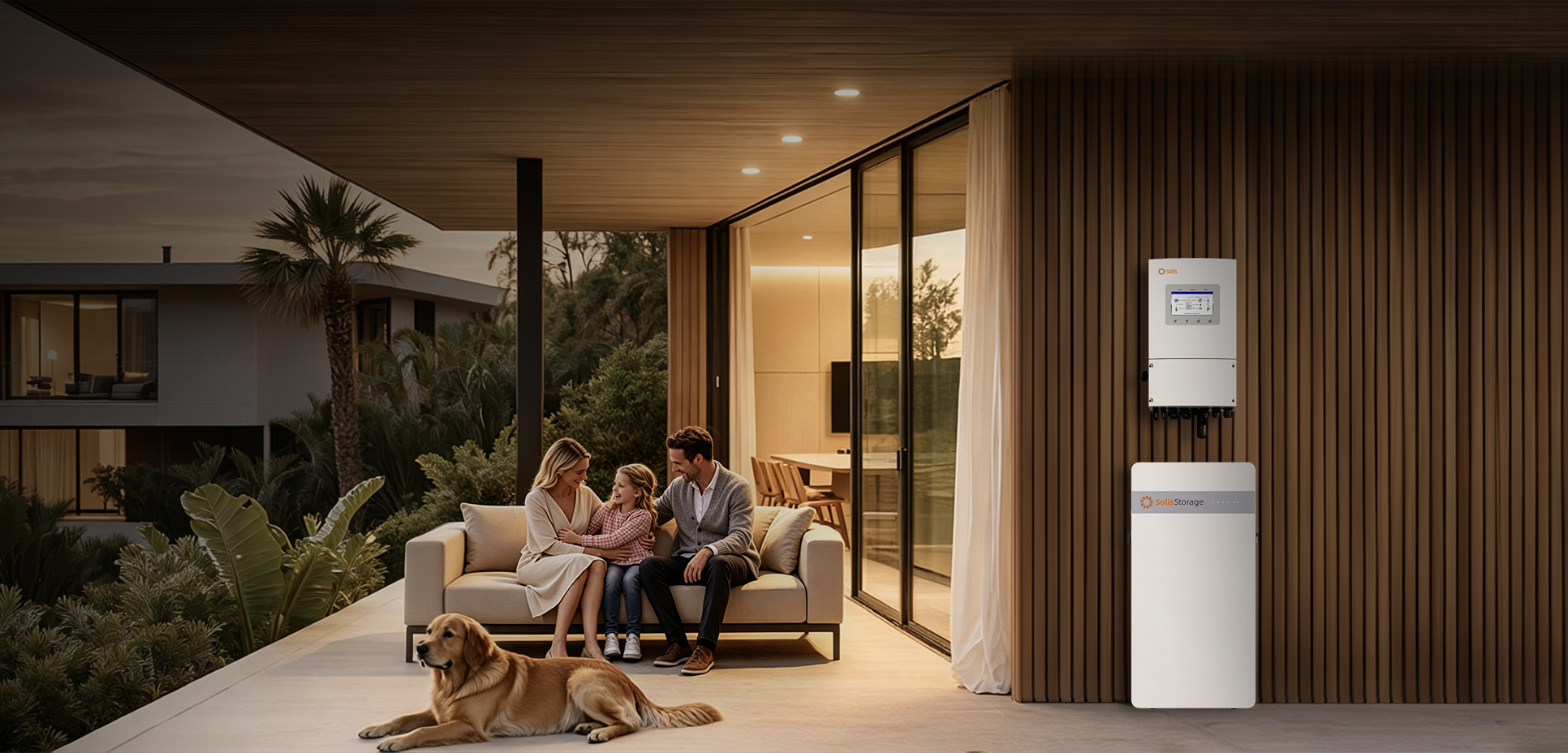
Residential systems from SolisStorage are designed for home solar battery storage, off-grid energy storage, and hybrid energy storage. They support solar battery storage configurations and are typically selected for lower energy demand, simple installation, and reliable backup. Residential buyers typically prioritize compact size, ease of use, monitoring via SolisCloud, and compatibility with existing solar arrays.
C&I Energy Storage Systems
For commercial and industrial projects, SolisStorage offers the EverCore ESS series. The EverCore system is built around a 125 kW hybrid energy storage inverter with an AC-DC separation architecture. This design physically separates the inverter from the battery cabinet, improves thermal management, raises protection ratings, and allows flexible DC-side expansion.
In a comparison commonly used in the market, the SolisStorage EverCore ESS is positioned against systems from Huawei, Sigen, and SolaX. The core architectural difference is the hybrid topology with clear separation of DC and AC circuits, combined with fully integrated four-in-one power electronics.
Step-by-Step Breakdown: How to Compare Energy Storage Systems
Use this five-step framework when evaluating either a residential or a C&I energy storage system.
Step 1: Define the Application and Load Profile
Start with the load. A home typically needs 5–20 kWh of usable storage for backup and self-consumption. A commercial site may need 100 kWh to several MWh, especially for industrial manufacturing, low-carbon industrial parks, hospitals, cold-chain logistics, and small-scale agriculture.
Step 2: Choose the Right Architecture
Residential storage often uses an integrated hybrid inverter. C&I systems should be evaluated on architecture. SolisStorage EverCore uses AC-DC separation, which means the hybrid energy storage inverter (AC side) and the battery cabinet (DC side) are fully decoupled. External inverter placement allows power heat from the inverter to dissipate into the ambient environment, leaving less heat inside the battery cabinet.
Step 3: Check Thermal Management and Environmental Ratings
Thermal management is a major cost and reliability driver. The EverCore air-cooled design uses an independent three-air-duct structure and Coanda Effect airflow attachment, improving system heat dissipation efficiency by 30% compared to traditional air cooling. The system operates from -25°C to 55°C and at altitudes up to 4,000 meters, with IP66 for the hybrid inverter and IP55 for the battery cabinet, plus C4-grade anti-corrosion coating.
For residential systems, buyers should check operating temperature range, noise level, IP rating, and whether the system is suitable for indoor or outdoor installation.
Step 4: Evaluate Expansion, Maintenance, and Lifecycle Cost
Expansion matters more than most buyers expect. The EverCore inverter supports up to 6 battery cabinets in parallel, enabling linear DC-side expansion without adding another inverter. According to SolisStorage data, this reduces system expansion costs by approximately 10%.
Maintenance cost is often underestimated. EverCore saves approximately €9,500 per unit in full-lifecycle O&M costs by eliminating liquid cooling fluid replacement, simplifying PCS replacement, simplifying pack replacement, and reducing routine inspection complexity. Pack replacement steps are reduced by 55%, and two technicians can complete replacement using specialized tools without heavy equipment. The cooling fans are Minebea industrial-grade units with 10-year maintenance-free performance, and the flammable gas detectors are Honeywell industrial-grade units with 10-year calibration-free performance.
Step 5: Verify Safety and Software Ecosystem
Safety protection is critical for insurance underwriting and long-term owner confidence. The EverCore system uses a 15-layer protection structure spanning cell, pack, and system levels, with 1,000°C-resistant thermal insulation material and a three-stage fire-fighting mechanism including pack-level aerosol, cabinet-level aerosol, and fire-fighting water channels.
Software openness is equally important in mature electricity markets. EverCore has been connected or is in the process of connecting with 102 third-party VPP/EMS operators across 11 European countries. Integrations include the Kraken platform under Octopus Energy in the UK, aggregator platforms such as Check Watt in the Nordic market, and dozens of local EMS providers in the German-speaking region and Benelux. Solis also deploys its Solis AI Cloud Platform at more than 5,500 energy storage power stations worldwide, using Nordpool and Flatpeak electricity price data for minute-level optimization.
Use Cases: Which System Fits Which Purchase Scenario
Residential Solar Battery Energy Storage
A household with rooftop solar wants to increase self-consumption and maintain power during outages. A residential ESS with a hybrid inverter is the primary choice.
Commercial Energy Storage for Peak Shaving
A factory or commercial building faces high demand charges during daytime operation. A C&I energy storage system charges during off-peak hours and discharges during peak hours.
Industrial Manufacturing and Low-Carbon Industrial Parks
Industrial manufacturing sites and low-carbon industrial parks need high-power energy storage with robust protection and expansion capability. The EverCore ESS is designed for such environments.
Hospitals and Cold-Chain Logistics
Hospitals and cold-chain logistics require high reliability and backup power for critical equipment. System protection, rapid switching, and maintenance simplicity become decisive factors.
Off-Grid and Hybrid Applications
Off-grid energy storage systems and hybrid energy storage systems serve remote sites, agriculture, or areas with unstable grids. Seamless grid-tied/off-grid switching in less than 10ms, without an external STS, supports sensitive equipment.
Comparison Table: Residential vs. C&I Energy Storage Systems
| Comparison Criterion | Residential ESS | C&I ESS (SolisStorage EverCore) |
|---|---|---|
| Primary application | Single homes, rooftop solar self-consumption, backup power | Factories, commercial buildings, industrial parks, hospitals, cold-chain logistics, agriculture |
| Typical power range | Smaller, household-sized power | High power, up to 125 kW per inverter unit |
| System architecture | Compact integrated hybrid unit | AC-DC separation, four-in-one integrated power electronics (PCS + STS + PV inverter + circuit breaker protection + EMS) |
| Thermal management | Simpler, indoor-friendly design | Air-cooled with independent three-air-duct and Coanda Effect; 30% heat dissipation efficiency improvement vs. traditional air cooling |
| Environmental rating | Depends on model | Inverter IP66, battery cabinet IP55, C4 anti-corrosion, -25°C to 55°C, up to 4,000m altitude |
| Expansion | Limited to household capacity | Up to 6 battery cabinets per inverter, ~10% lower expansion cost |
| Maintenance | Low routine maintenance | ~€9,500 saved per unit over full lifecycle; pack replacement steps reduced by 55% |
| Safety | Standard household protection | 15-layer protection, 1,000°C insulation, three-stage fire-fighting mechanism |
| Software ecosystem | Home monitoring and app control | 102 third-party VPP/EMS operators in 11 European countries; Solis AI Cloud Platform at 5,500+ sites |
Frequently Asked Questions
What safety standards apply to energy storage systems?
For international deployment, energy storage systems are commonly evaluated against IEC 62619, the key international safety standard for secondary lithium cells and batteries used in industrial and energy storage applications. For North American market access, systems must comply with UL 9540 for system safety and UL 9540A for thermal runaway fire propagation testing.
Can a C&I energy storage system work with an existing PV system?
Yes. A system with the right architecture can support both DC and AC coupling. The SolisStorage EverCore hybrid inverter eliminates the need for an external PV inverter and supports a PV over-sizing ratio of up to 200%, which helps unlock the utilization potential of existing solar assets.
How fast can a C&I energy storage system switch between grid-tied and off-grid mode?
EverCore achieves seamless grid-tied/off-grid switching in less than 10ms without an external STS. This helps meet strict power quality requirements for precision industrial equipment in hospitals, manufacturing, and other sensitive facilities.
How much does a C&I energy storage system cost compared to alternatives?
Available internal comparison data indicates a 5% lower cost compared to alternatives, in addition to higher efficiency and improved thermal management. For current pricing, please request a quote with your project load profile and location.
What is the difference between 280Ah and 314Ah battery cells?
EverCore uses A-grade 314Ah LFP cells. Compared to standard 280Ah cells, the 314Ah cell offers ultra-low internal resistance of 0.15±0.05mΩ versus 0.17mΩ, and 8,000 cycles at 0.5C (remaining capacity ≥70%) versus 7,000 cycles. Based on 500 charge-discharge cycles per year, this extends the economic lifecycle from approximately 14 years to 16 years.
Conclusion
The realistic decision between residential and C&I energy storage is not a question of which category is better, but which system matches the project's load profile, expansion plan, environmental conditions, and revenue model.
Residential buyers should prioritize compact integration, solar compatibility, and reliable backup. C&I buyers should prioritize architecture, thermal management, protection ratings, expansion flexibility, safety, and software openness.
SolisStorage covers both segments, with the EverCore ESS representing the C&I approach based on AC-DC separation, air-cooled thermal management, integrated power electronics, and an open VPP/EMS ecosystem.
Need help choosing between residential and C&I energy storage?
Request a sample, quote, or technical consultation with your project details.
Contact SolisStorageDownload the company brochure here: Solis Global Brochure
Have Questions or Need More Details?
Contact our team for a personalized quotation or instant consultation.
Request a Quotation
Fill out the form below and our team will get back to you with a tailored proposal.
WhatsApp Direct Chat
Prefer to chat in real-time? Message us on WhatsApp for instant assistance & quick answers.
- Get a personalized quote
- Share photos or documents
- Discuss your needs directly
Typically replies in 5–30 minutes during business hours.