What Is an Energy Storage System? ESS Technology, Types, and Applications Explained
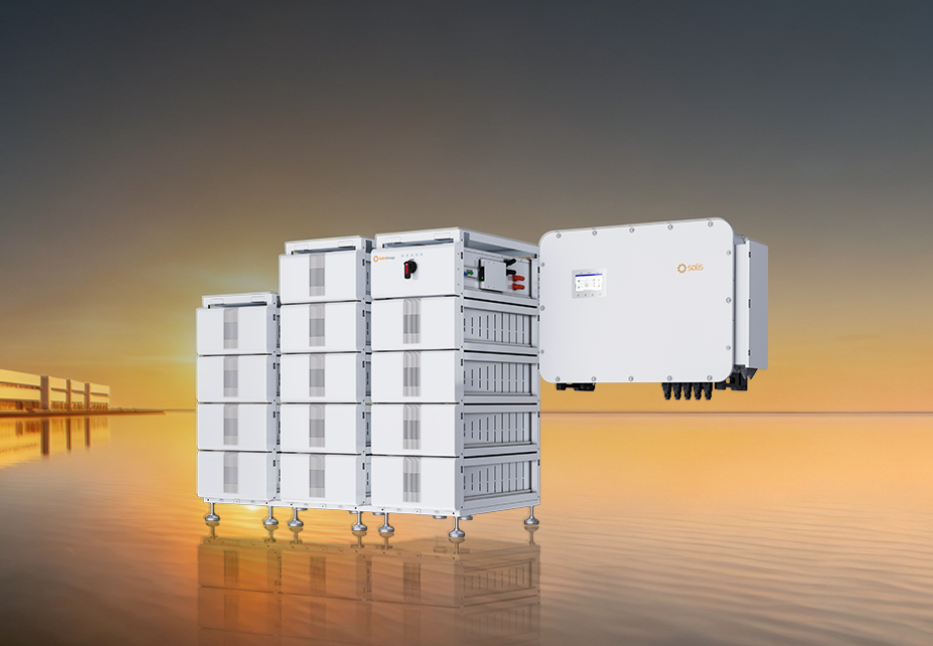
SolisStorage FlexCore-ID stackable energy storage system
An energy storage system (ESS) is a combination of batteries, power electronics, control software, and safety components that stores electrical energy and releases it when needed. In a solar installation, an ESS usually stores surplus solar energy during the day and supplies it during the evening or during a grid outage. In commercial and industrial projects, it can shift energy consumption away from peak-price periods, support frequency regulation, or provide backup power. This guide explains what an ESS is, which main types exist, and how to evaluate one for a home, business, or utility project.
Why Energy Storage Is Becoming a Core Purchase Consideration
Energy generation and energy consumption rarely happen at the same time. Solar production peaks at midday, while many homes and businesses consume the most electricity in the morning and evening. Grid infrastructure in many regions is under pressure from renewable integration and extreme weather. Electricity tariffs increasingly reward flexible consumption. These conditions create a clear problem: electricity is most valuable when it is available at the right time, not only when it is generated. An ESS addresses this by decoupling the moment of generation from the moment of use.
For residential users, the most common goals are increasing self-consumption of PV power, providing backup power during outages, and shifting loads away from expensive peak periods. For commercial and industrial users, an ESS can support peak shaving, frequency regulation, grid stability retrofitting, and participation in virtual power plant (VPP) projects. For utility-scale applications, storage helps integrate renewable power plants and stabilize the grid.
Energy Storage Industry Background in 2026
Published market research indicates that energy storage has moved from a niche technology to a mainstream infrastructure category. Global Market Insights estimates that the global energy storage systems market was valued at approximately USD 668.7 billion in 2024 and is projected to reach USD 5.12 trillion by 2034. It should be noted that estimates vary significantly because some research firms include pumped hydro storage while others cover battery storage only.
MarketsandMarkets estimates that the residential energy storage market was worth approximately USD 2.69 billion in 2024 and will grow to USD 4.58 billion by 2030, at a compound annual growth rate of about 9.3%. The same research firm values the long-duration energy storage (LDES) market at USD 4.85 billion in 2024, with an expected CAGR of 13.6% through 2030. Long-duration energy storage, broadly understood as systems designed to shift energy over several hours or more, is becoming increasingly relevant as renewable penetration rises.
On the supply side, Reuters and the China Electric Vehicle Industry Technology Innovation Strategic Alliance reported that China's exports of lithium-ion batteries for energy storage and non-automotive uses exceeded USD 65 billion in 2024, an increase of 51.4% from the previous year. For buyers, these signals point in the same direction: energy storage systems are no longer optional add-ons but core components of modern energy management.
SolisStorage Energy Storage Solutions: An Overview
Within this growing market, buyers need a supplier that connects product specifications to real applications. Solis (Ginlong Technologies) Co., Ltd., founded in 2005, is listed on the Shenzhen Stock Exchange with stock code 300763 and has more than 20 years of experience in power electronics. SolisStorage, its energy storage subsidiary, provides residential energy storage, commercial and industrial energy storage, and utility-scale energy storage solutions. The company's R&D team consists of more than 1,000 engineers, and its production capacity reaches 80 GW per year. The manufacturing facility covers 98,114.69 square meters and employs more than 5,000 staff.
Solis products are deployed in more than 100 countries and regions worldwide, with major markets including Europe, Africa including South Africa, the Middle East and Central Asia, and South Asia. Export business accounts for 70% of total sales. For early-stage buyers, the SolisStorage portfolio can be understood through three system categories: residential, stackable, and commercial and industrial.
Residential ESS: IntelliHome
IntelliHome is a residential energy storage system designed for household use. It uses LiFePO4 battery chemistry with a nominal capacity of 5 kWh and a rated cell capacity of 100 Ah. The recommended charge/discharge current is 50 A, and the operating voltage range is 44.8 to 57.6 V. Its cycle life is greater than 6,000 cycles, corresponding to 10 years. The ingress protection rating is IP66, and the casing is made of aluminum alloy with core electronic components. For a home owner, this type of system supports self-consumption of solar power and provides a weather-protected enclosure suitable for residential installation.
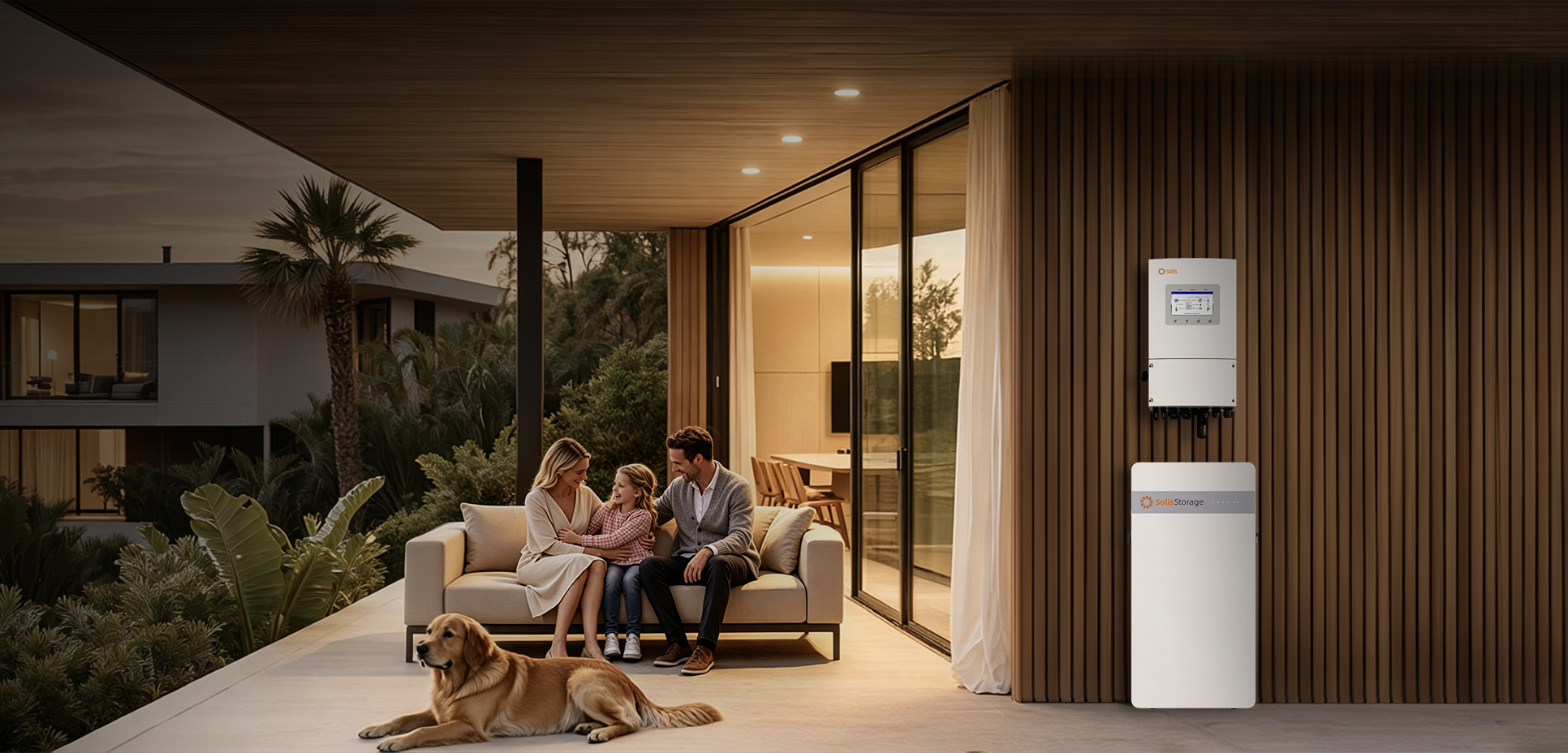
SolisStorage IntelliHome residential energy storage system
Stackable ESS: FlexCore-ID
FlexCore-ID is a stackable energy storage system designed for small farms, shopping malls, hospitals, large residences, and small industrial and commercial enterprises. It uses LFP battery chemistry with a cell capacity of 314 Ah and a cycle life of at least 8,000 cycles at 25±2°C, 0.5P, EOL70%. The battery pack model is FlexCore-ID-BAT20kWh. The system is constructed with an aluminum alloy casing and core electronic components. Stackable architecture gives buyers more flexibility to add capacity over time, which is relevant for businesses that expect load growth.
C&I ESS: EverCore ESS
EverCore ESS is the commercial and industrial energy storage system in the SolisStorage portfolio, designed for the renewable energy and power grid industry. It uses EVE LFP cells with specifications of 3.2 V and 314 Ah, and a cycle life of 8,000 cycles. Rated energy capacity options are 100.5 kWh, 120.6 kWh, and 261.2 kWh. Inverter power ratings are available in 50 kW, 60 kW, and 125 kW. The battery cabinet has IP55 protection, while the inverter has IP66 protection.
At the architecture level, EverCore uses AC-DC separation, meaning the hybrid energy storage inverter on the AC side is physically separated from the battery cabinet on the DC side. This design reduces heat accumulation inside the battery cabinet, allows the inverter to achieve IP66 protection, and supports independent DC-side expansion. One inverter can connect up to six battery cabinets in parallel. EverCore also retains a controlled air-cooled design with a dedicated three-air-duct architecture, supported by cooling airflow technology that improves heat exchange efficiency compared with traditional air cooling.
For buyers interested in advanced energy markets, software compatibility matters. EverCore has been connected or is in the process of connecting with 102 third-party VPP/EMS operators across 11 European countries. Integration examples include the Kraken energy management platform under Octopus Energy in the UK market and aggregator platforms such as Check Watt in the Nordic market. This type of ecosystem compatibility allows users to participate in electricity spot markets and grid service programs, expanding revenue beyond simple peak-valley arbitrage.
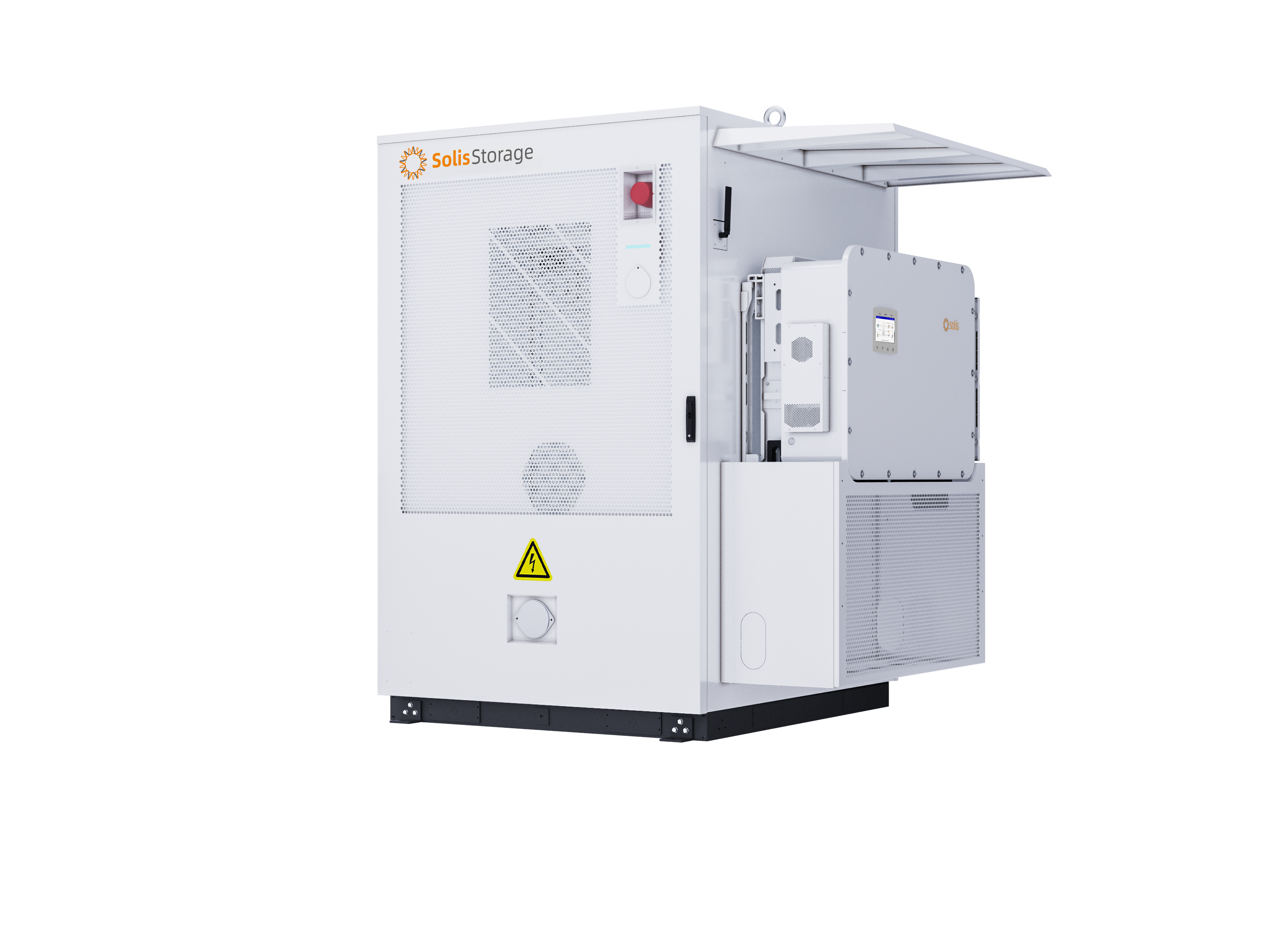
SolisStorage EverCore ESS commercial and industrial unit
Step-by-Step: How to Evaluate an Energy Storage System
The following seven steps can help a buyer move from awareness to a shortlist of suitable ESS configurations.
Step 1: Define the Application and Operating Profile
Residential users usually need self-consumption of PV power, backup power supply, or peak load shifting. C&I users may need peak shaving, frequency regulation, grid stability retrofitting, or VPP-related projects. Some installations are grid-tied, some are off-grid, and some require seamless backup switching. Write down the required functions before comparing hardware.
Step 2: Select the System Type
Choose the category that matches the building and load type. A single-family home normally fits a residential ESS such as IntelliHome. A project that may expand over time fits a stackable system such as FlexCore-ID. A factory, commercial building, or renewable power plant with larger energy demand fits a C&I system such as EverCore ESS.
Step 3: Match Capacity and Power
Capacity determines how much energy can be stored, and inverter power determines how quickly it can be delivered. A 5 kWh residential battery is appropriate for basic home self-consumption. Larger stackable systems provide more flexibility. In the EverCore family, rated energy capacities range from 100.5 kWh to 261.2 kWh, with inverter power ratings from 50 kW to 125 kW. The right combination depends on the load curve and required backup duration.
Step 4: Check Battery Chemistry and Cycle Life
Most modern ESS products use lithium iron phosphate chemistry because of its safety characteristics and long cycle life. Buyers should compare cycle life under a defined test condition. In the SolisStorage range, IntelliHome offers more than 6,000 cycles with a 10-year design life. FlexCore-ID and EverCore ESS offer at least 8,000 cycles depending on temperature, discharge rate, and end-of-life criteria. Longer cycle life directly affects the economic lifetime of the system.
Step 5: Confirm Environmental Protection
ESS installations may be placed outdoors or in industrial environments with wide temperature ranges, coastal salt fog, or high altitude. Ingress protection ratings indicate how well the enclosure resists dust and water. IntelliHome is rated IP66. EverCore ESS uses IP55 for the battery cabinet and IP66 for the inverter. Buyers should verify that the selected system is suitable for the local climate and installation position.
Step 6: Plan for Energy Management and Grid Services
An energy storage system is more than hardware. Monitoring sensors, a smart energy management platform, and VPP/EMS connectivity can significantly increase the value of the system. Solis has developed the Solis AI platform for charge-discharge optimization and supports third-party VPP/EMS integration in European markets. Buyers who plan to participate in demand response, frequency regulation, or spot market trading should prioritize systems with open software ecosystems.
Step 7: Evaluate the Supplier
Supplier reliability matters over a system lifetime of 10 to 15 years. Useful indicators include manufacturing scale, R&D depth, global deployment, and service network. Solis reports an R&D team of more than 1,000 engineers, an annual production capacity of 80 GW, a facility of 98,114.69 square meters, and products used in more than 100 countries and regions. According to Wood Mackenzie, Solis was ranked as the world's largest residential PV inverter manufacturer by shipments in 2023 and as the third largest inverter manufacturer globally. For an early-stage buyer, these facts reduce the risk of selecting a supplier without long-term staying power.
Common Energy Storage Use Cases
Energy storage systems are deployed across a wide range of scenarios. The most common use cases include:
- Residential self-consumption: store solar power during the day and use it in the evening to reduce electricity purchases from the grid.
- Backup power supply: maintain critical loads during grid outages with grid-tied, off-grid, or seamless backup switching modes.
- Peak load shifting: charge during low-price periods and discharge during high-price periods to lower energy costs.
- Frequency regulation and VPP participation: provide fast grid response and enable participation in virtual power plant projects.
- Industrial and commercial cost reduction: reduce demand charges and improve the stability of plant operations.
- Outdoor and harsh environments: systems designed for wide temperature ranges, coastal salt fog, and high altitude are used in markets such as Australia, Germany, France, and other countries.
For many customers, the common thread is 24/7 continuous operation. The ESS must charge, discharge, monitor, and communicate reliably throughout the day. This is why battery chemistry, protection rating, thermal management, and software integration should be evaluated together.
Comparison Table: SolisStorage ESS Portfolio at a Glance
| Parameter | IntelliHome | FlexCore-ID | EverCore ESS |
|---|---|---|---|
| System type | Residential energy storage system | Stackable energy storage system | C&I energy storage system |
| Target users | Residential homes | Small farms, shopping malls, hospitals, large residences, small industrial and commercial enterprises | Renewable energy and power grid industry, commercial and industrial users |
| Battery chemistry | LiFePO4 | LFP | EVE LFP 3.2V/314Ah |
| Nominal energy capacity | 5 kWh | Battery pack model FlexCore-ID-BAT20kWh | 100.5 kWh / 120.6 kWh / 261.2 kWh |
| Inverter power rating | Not specified in standard specification | Not specified in standard specification | 50 kW / 60 kW / 125 kW |
| Cycle life | Greater than 6,000 cycles / 10 years | Equal to or greater than 8,000 cycles at 25±2°C, 0.5P, EOL70% | 8,000 cycles |
| Ingress protection | IP66 | Aluminum alloy casing and core electronic components | IP55 cabinet / IP66 inverter |
FAQ
What safety and compliance standards apply to energy storage systems?
To access North American markets, energy storage systems must comply with UL 9540 for system safety and UL 9540A for thermal runaway fire propagation testing. Internationally, IEC 62619 is a key safety standard for secondary lithium cells and batteries used in industrial and energy storage applications. Buyers should also confirm the ingress protection rating, such as IP55 or IP66, based on the installation environment.
What energy storage system types and capacities does SolisStorage offer?
SolisStorage covers three main categories. IntelliHome is a residential ESS with 5 kWh nominal capacity, LiFePO4 chemistry, more than 6,000 cycles, and IP66 protection. FlexCore-ID is a stackable ESS for small farms, shopping malls, hospitals, large residences, and small C&I users; it uses 314 Ah LFP cells with at least 8,000 cycles. EverCore ESS is a C&I system available with 100.5 kWh, 120.6 kWh, or 261.2 kWh capacity and 50 kW, 60 kW, or 125 kW inverters, with IP55 cabinet and IP66 inverter protection.
How much does an energy storage system cost, and what determines the budget?
Energy storage manufacturers rarely publish fixed prices because the final cost depends on capacity, inverter power, battery chemistry, protection class, software, installation, and project scope. For orientation, the SolisStorage portfolio starts from a 5 kWh residential system and scales to 261.2 kWh C&I cabinets. An accurate budget should be based on a quotation that includes your load profile, operating mode, and target application.
Can I request a sample, catalog, or quotation?
Yes. You can contact Solis directly by email at sales@ginlong.com or by phone at +86 574 65802188. You can also download the Solis Global Brochure for a portfolio overview, then request product datasheets, sample availability, and pricing for your region.
How can I get up-to-date lead time information for an energy storage system order?
Lead times depend on the model, order volume, and destination. The most reliable way to get current information is to contact SolisStorage through sales@ginlong.com or +86 574 65802188. The sales team can confirm availability, production planning, and delivery timing for the product configuration you need.
Conclusion
An energy storage system is not a single product; it is a decision framework that includes battery chemistry, power electronics, safety, protection, software, and supplier reliability. The best starting point is the application, not the brand. Once the use case is clear, compare cycle life, capacity, inverter power, protection ratings, and ecosystem compatibility.
SolisStorage offers three system categories that cover the majority of residential, stackable, and C&I needs. For detailed specifications, sample requests, or quotes, contact Solis at sales@ginlong.com or +86 574 65802188.

Want to compare SolisStorage systems for your project?
Download the Solis Global BrochureRequest a QuoteHave Questions or Need More Details?
Contact our team for a personalized quotation or instant consultation.
Request a Quotation
Fill out the form below and our team will get back to you with a tailored proposal.
WhatsApp Direct Chat
Prefer to chat in real-time? Message us on WhatsApp for instant assistance & quick answers.
- Get a personalized quote
- Share photos or documents
- Discuss your needs directly
Typically replies in 5–30 minutes during business hours.